top of page

About Us

Our Story
Our story begins in 2023 when Ismail Konneh returned to Liberia after completing his undergraduate studies. While moving through communities in Paynesville, he noticed how scrap metal was being handled. Materials from dismantled vehicles, construction sites, and broken equipment were widely available, but there was no clear system for how they were collected or sold.
Collectors moved from place to place searching for buyers. Prices changed without explanation. Weighing was inconsistent, and buyers were not always present. As a result, income for collectors was unpredictable despite consistent effort.
At the same time, recycling and export buyers needed steady supply, but materials were fragmented and unreliable. Valuable scrap was often undervalued or wasted.
This gap made one thing clear: there was no structure connecting collection to consistent demand.
KKMG was created to solve this in a practical way. The goal was simple: create a fixed place where people can sell regularly, with clear pricing and fair measurement, and build a system that connects local collection to consistent market demand.
Our Mission
To build a reliable and transparent system for scrap metal collection and supply that improves income for collectors and reduces unmanaged waste in communities.
Our Vision
To develop a structured scrap metal market in Liberia where materials move efficiently from collection to recycling, and informal work becomes more stable, recognised, and fairly valued.
Background
Globally, over 2 billion tonnes of scrap metal are generated each year, making it one of the largest material streams in the circular economy. However, only a portion is formally recovered and reused.
Steel and metal recycling already plays a major role in global industry, with hundreds of millions of tonnes processed annually and significant energy savings compared to raw material extraction.
Despite this scale, large volumes still move through informal or inefficient systems, especially in developing economies where structured collection is limited. This leads to lost material value, environmental pollution, and unsafe handling practices.
Across Africa, scrap metal recovery is often driven by informal collectors, but lack of structured aggregation systems results in inconsistent supply and undervaluation of materials.
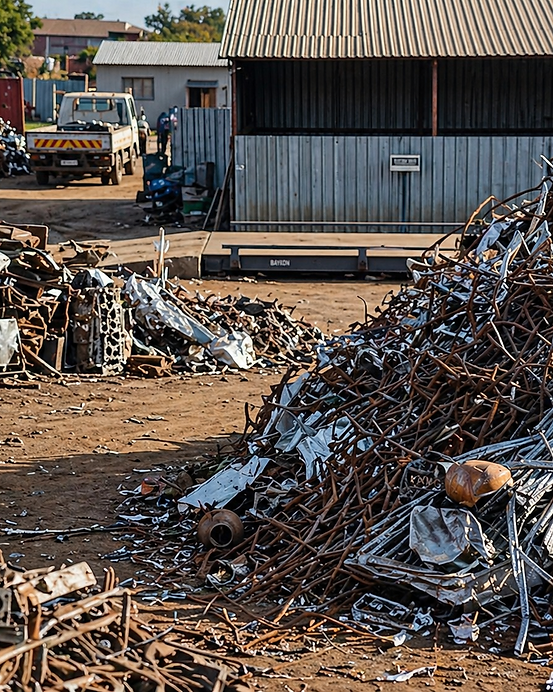
In Liberia, scrap metal is widely present in urban and peri-urban areas through discarded vehicles, construction materials, and industrial waste. However, there is limited formal infrastructure for consistent collection, weighing, sorting, and supply to recycling and export markets. As a result, materials often remain unmanaged or pass through irregular trading channels, reducing income potential and contributing to environmental and safety challenges.
Our Approach
Our approach focuses on building structure around existing scrap metal activity by improving consistency, fairness, and reliability across the system.
Philosophy
We believe informal systems do not fail because people are unwilling to work, but because there is no structure that makes work predictable and fair. Our focus is to introduce consistency, transparency, and trust into how scrap metal is bought and sold, without removing the people already working in the system.

Strategy
We build structure around existing activity rather than replacing it. A fixed buying point creates a predictable place for exchange, standardised weighing ensures fairness, and consistent pricing within market ranges stabilises value for collectors and buyers. Materials are then organised into reliable supply for formal recycling and export markets.

Partnership Method
We work through repeat relationships with collectors and buyers. Collectors rely on us for regular access to a stable market, while buyers rely on us for consistent volumes and prepared materials. Trust is built through repetition, clear processes, and dependable transactions rather than short-term deals.

bottom of page